


Advanced vs Qualified Electronic Signatures: What’s the Difference?
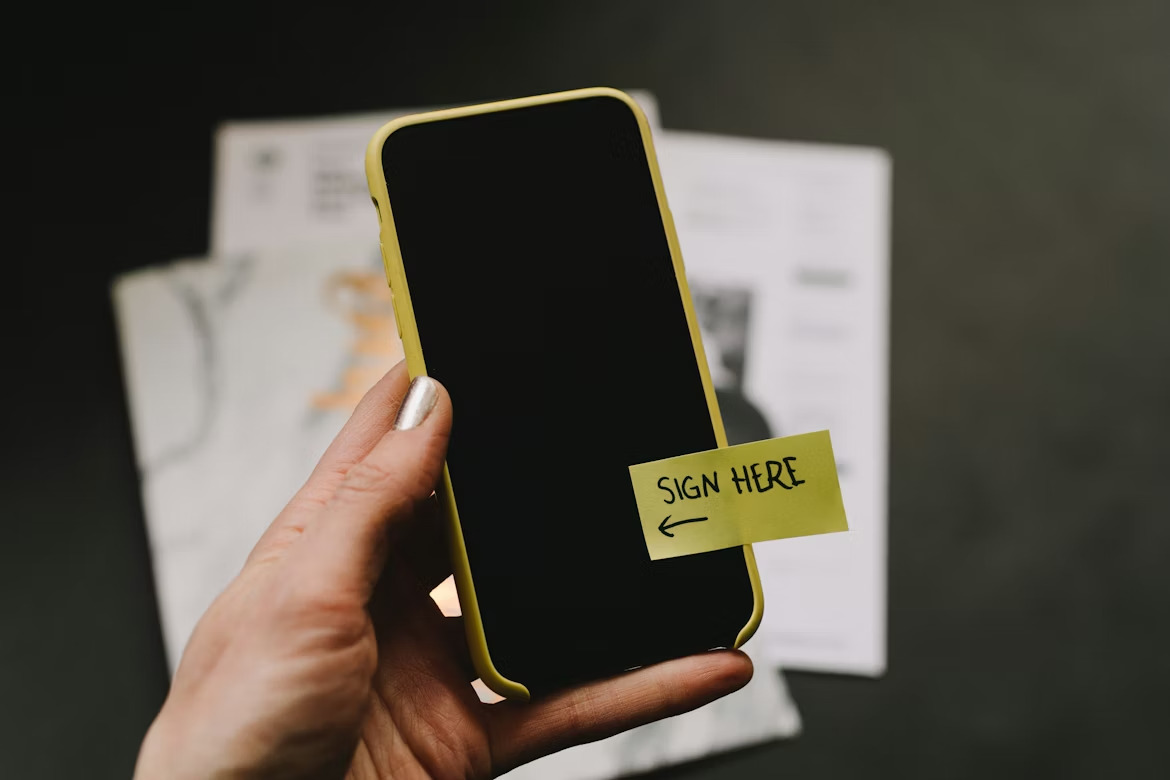

Electronic signatures have become a standard across many digital journeys. From contract signing and customer onboarding to HR processes and banking subscriptions, it is now possible to finalize agreements remotely, in just a few minutes, without any paperwork.
However, behind this apparent simplicity lies a more complex reality: not all electronic signatures offer the same level of security or legal value. Between simple, advanced, and qualified signatures, the differences can be significant.
This often leads to confusion: what exactly distinguishes an advanced electronic signature from a qualified one? And more importantly, when should each be used?
To understand these differences, it is essential to look at the framework that governs electronic signatures in Europe: the eIDAS Regulation (electronic IDentification, Authentication and trust Services).
Adopted in 2014, eIDAS harmonized rules across EU Member States and established a common legal foundation for electronic signatures. Its objective is clear: to create trust in digital transactions while enabling seamless cross-border exchanges. The regulation defines three levels of electronic signatures:
eIDAS plays a central role. It not only defines these levels but also sets technical requirements, identification processes, and the responsibilities of service providers, ensuring security, interoperability, and legal recognition.
While advanced and qualified signatures may seem similar, they are built on very different requirements.
An advanced electronic signature must meet several criteria defined by eIDAS: it must be uniquely linked to the signer, capable of identifying them, and ensure the integrity of the signed document.
It already offers a strong level of security and is widely used for many business scenarios, including commercial contracts, HR workflows, and standard customer journeys. A qualified electronic signature goes significantly further. It relies on:
Its key advantage is legal presumption: in case of dispute, it is automatically considered equivalent to a handwritten signature, without requiring additional proof.
One of the main differences lies in how the signer’s identity is verified.
For advanced signatures, identification methods can vary depending on the context and risk level. These may include document checks, automated verification processes, or even manual review.
For qualified signatures, the bar is much higher. Identity must be verified according to stringent standards, often aligned with “high” assurance levels. This typically involves rigorous processes, sometimes supported by advanced technologies such as biometrics, and certified controls.
This ensures that the signer’s identity is established with a very high level of confidence.
Another key distinction concerns the role of service providers.
Advanced signatures can be delivered by a wide range of providers, without necessarily being certified as qualified trust service providers. As a result, the level of assurance depends on the chosen solution.
In contrast, qualified signatures can only be issued by Qualified Trust Service Providers (QTSPs). These providers are certified, audited, and supervised by national authorities. They must comply with strict requirements related to security, traceability, and regulatory compliance.
This framework ensures a high level of reliability, recognized across the entire European Union.
Conclusion
The difference between advanced and qualified electronic signatures goes beyond technical aspects, it reflects different levels of trust and legal assurance.
Advanced signatures offer an excellent balance between security and user experience for many everyday use cases. Qualified signatures, on the other hand, are essential for highly sensitive or regulated transactions where the highest level of legal certainty is required.
Ultimately, the choice depends on the level of risk, the regulatory environment, and business requirements. In a context of increasing fraud and stricter compliance expectations, understanding these distinctions is key to securing digital journeys in a sustainable way.
Ready to fight identity fraud?
Our facial biometrics experts are at your disposal to discuss your needs.

S’inscrire à notre newsletter
Rejoignez notre Uni-News et retrouvez les dernières nouveautés de la biométrie faciale dans votre Inbox !

Unissey, an ISO 30107-3 certified facial biometric solution to digitize, secure and streamline your remote identity verification processes.


